Blog ·
UPS in the workplace: how we build protected power for servers and critical equipment
A UPS isn't much use if the switchboard around it hasn't been properly thought out. Using photos of real installations, we show you how we arrange the input, output and bypass so that critical equipment stays powered, even during maintenance.
Servers, communications racks, laboratory equipment, process control, cold rooms with temperature logging… Many businesses have loads that cannot lose power for even a second. For them, a UPS (uninterruptible power supply) is installed. But the UPS is only one part: the other, just as important, is the electrical panel that connects it to the installation.
In this article we show you how we do it, with photos of real installations carried out by our team.
What a UPS does and what it doesn't
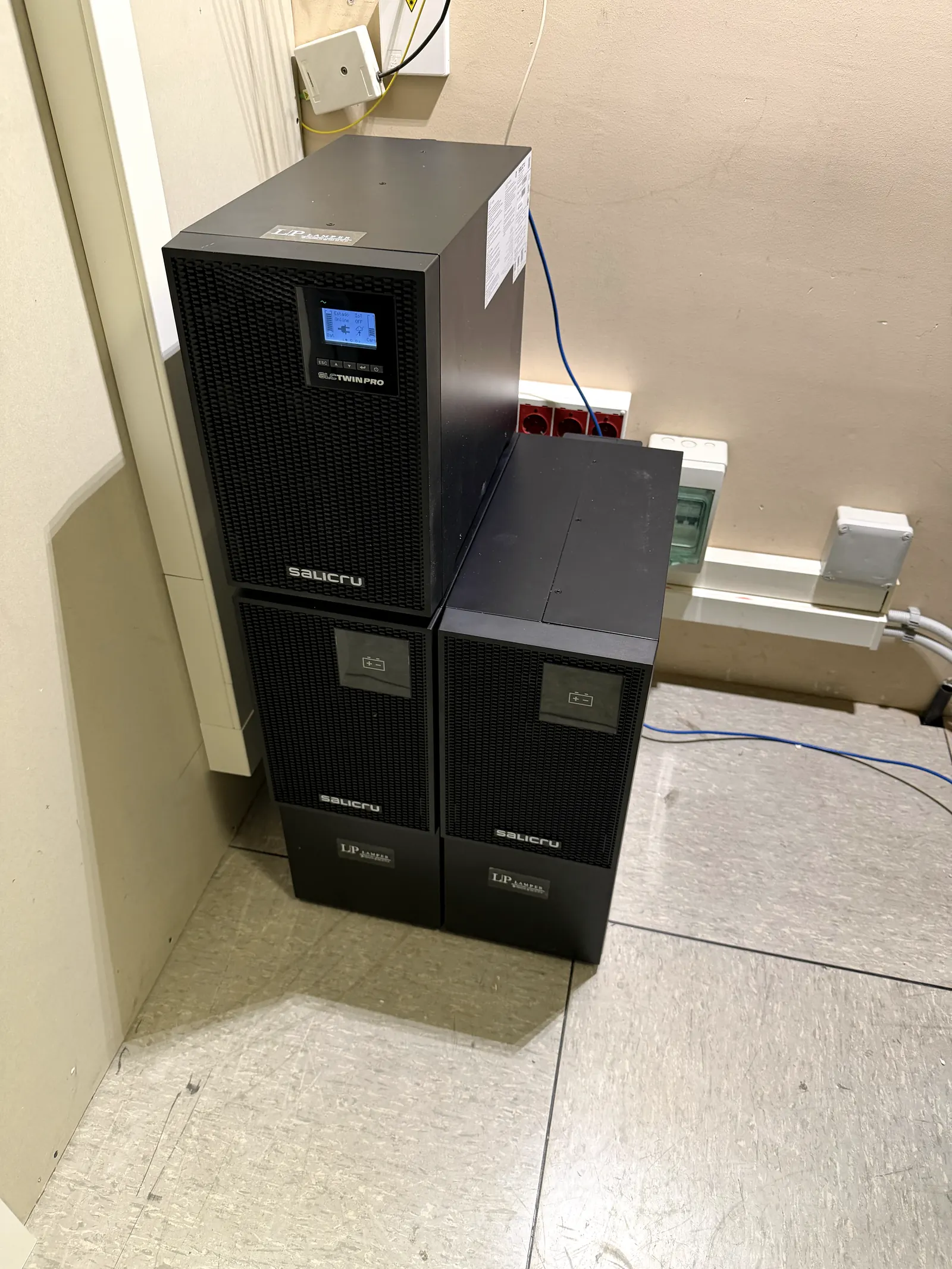
The UPS sits between the mains supply and the critical equipment. While the mains is available, it powers the loads and keeps its batteries charged; if the mains fails, it switches to powering them from the batteries. In online double-conversion UPSs, this changeover happens without interruption. Offline and line-interactive units switch over in a few milliseconds, and not all equipment can tolerate that. Depending on the type of unit, it also filters out mains disturbances.
What the UPS does not solve on its own is what happens when it needs maintenance, when its batteries need replacing or when the UPS itself fails. If the entire load hangs off it and there is no alternative ready, any intervention means shutting the equipment down. That is what a good changeover panel with a bypass solves.
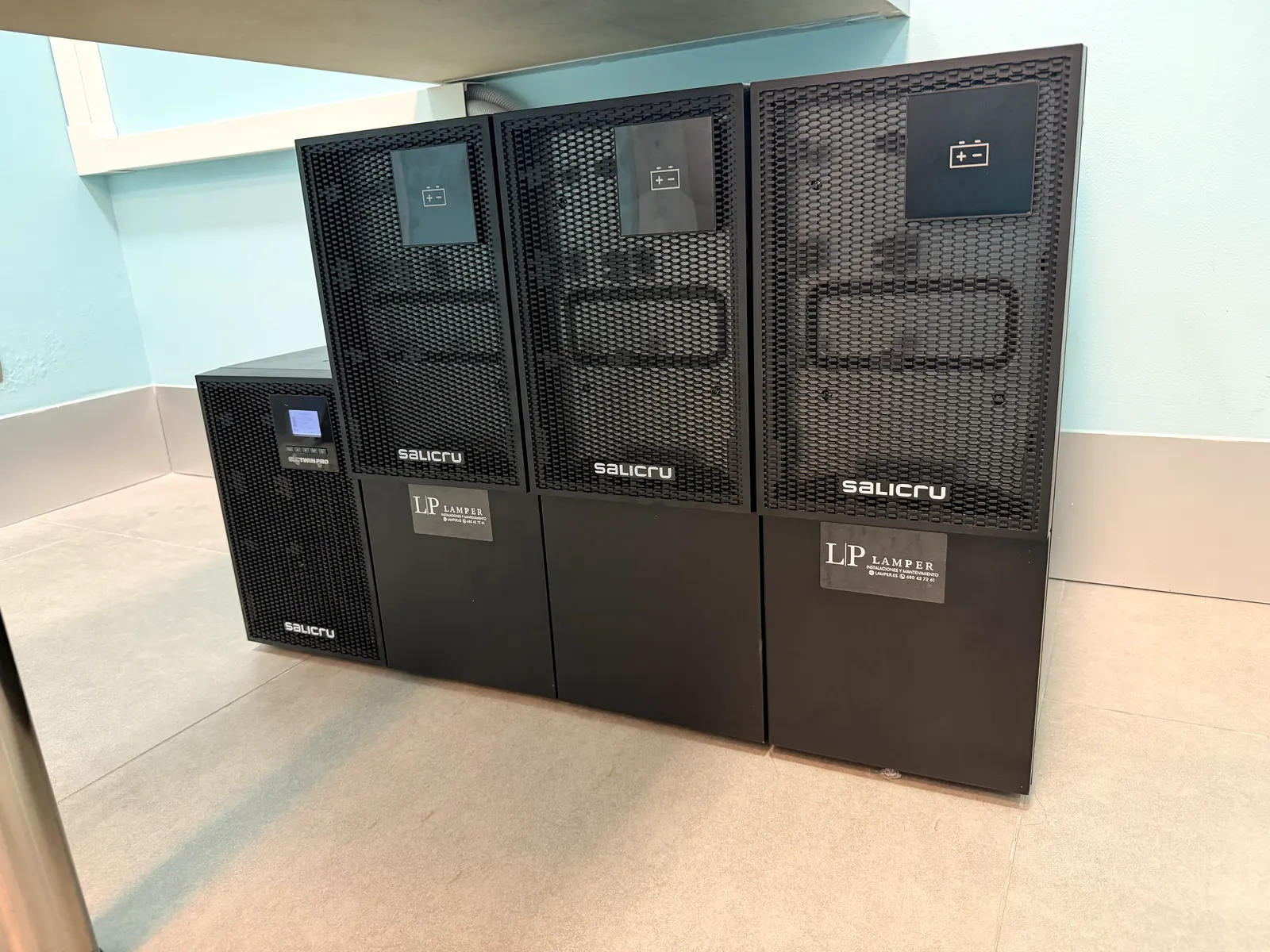
The key element: the maintenance bypass
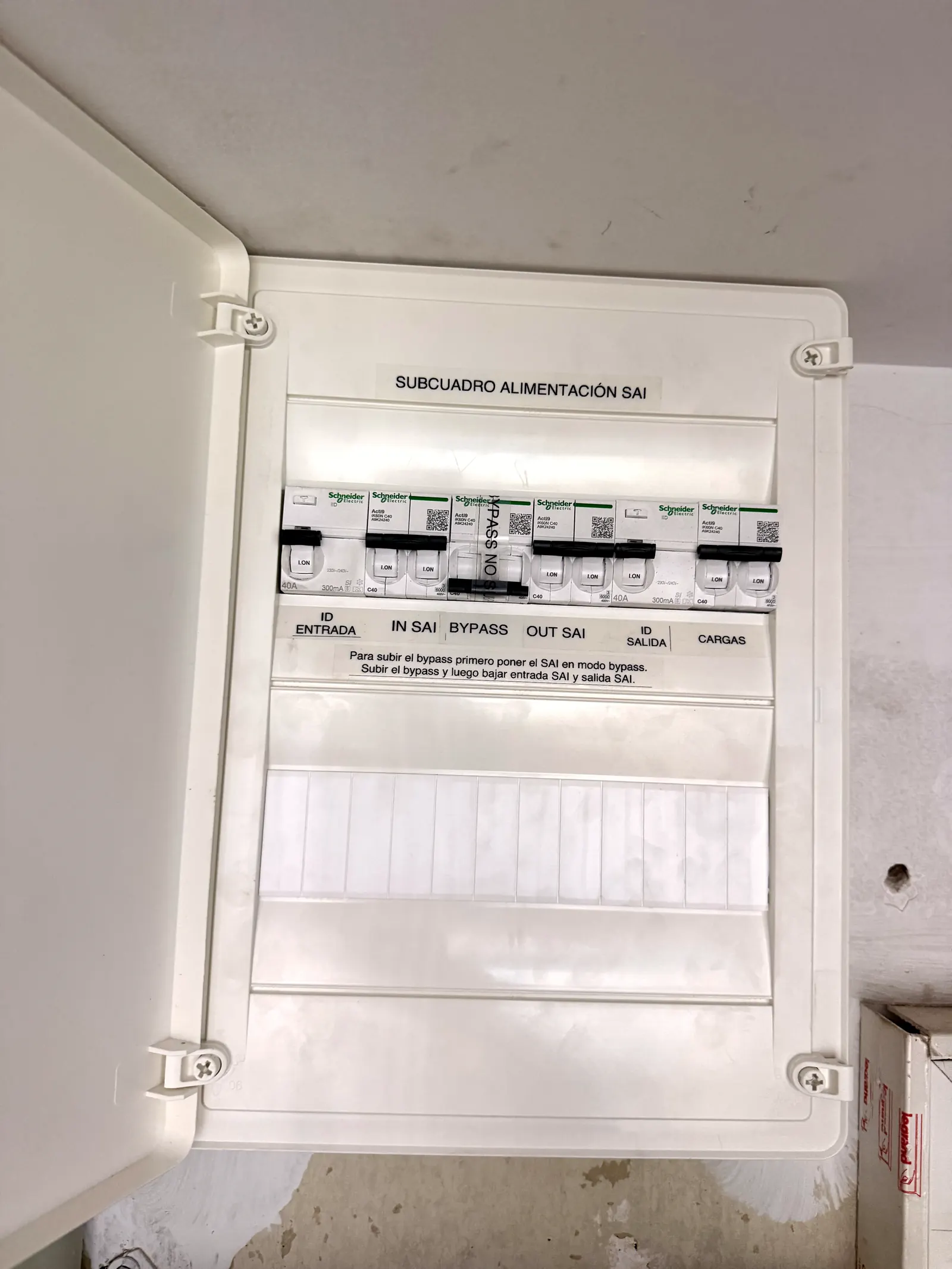
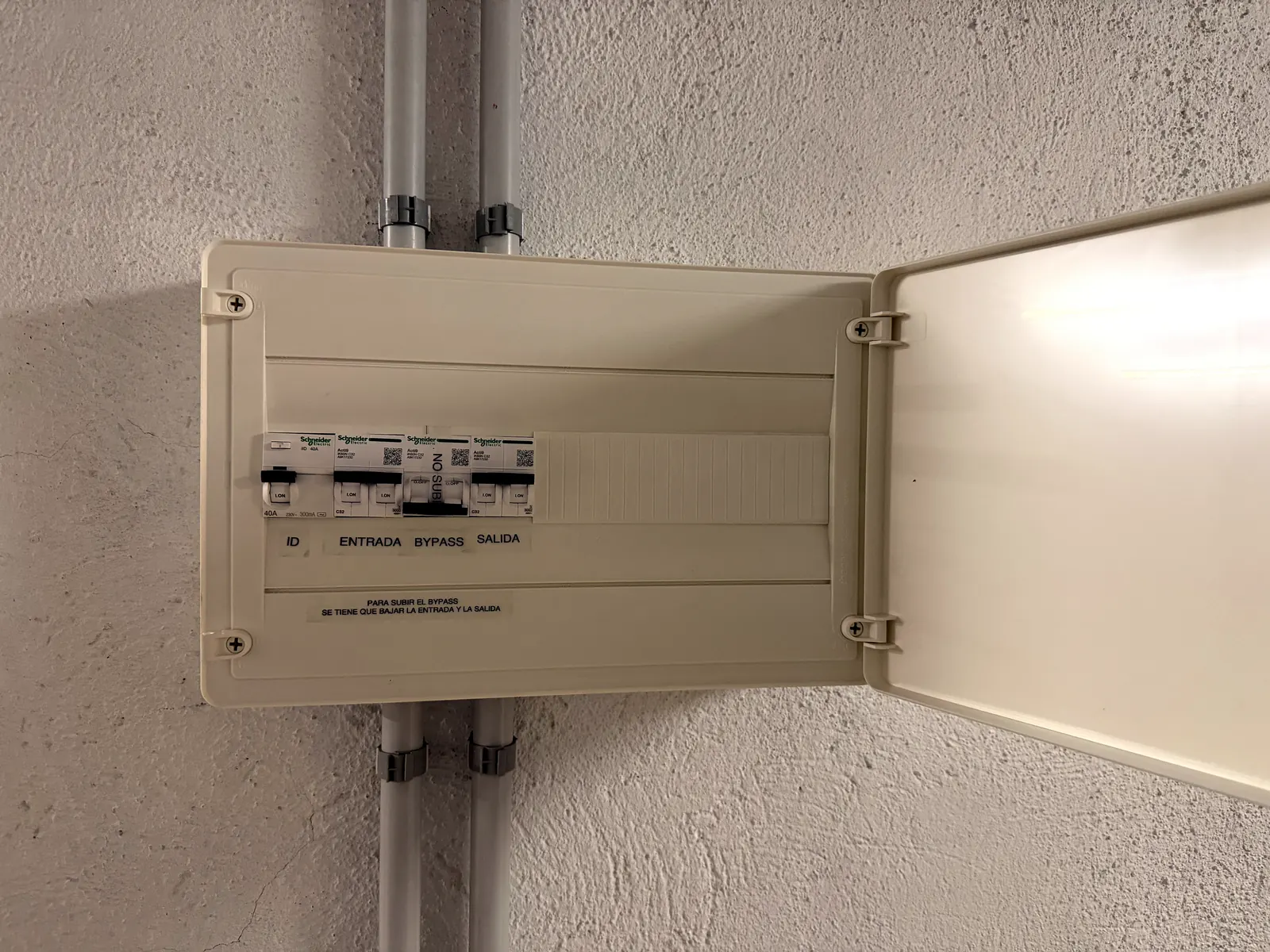
The bypass is an alternative path that takes the mains directly to the loads, skipping the UPS. With it, the UPS can be de-energised for servicing or battery replacement while the equipment keeps running on the mains.
For it to be safe, the bypass has to be well designed:
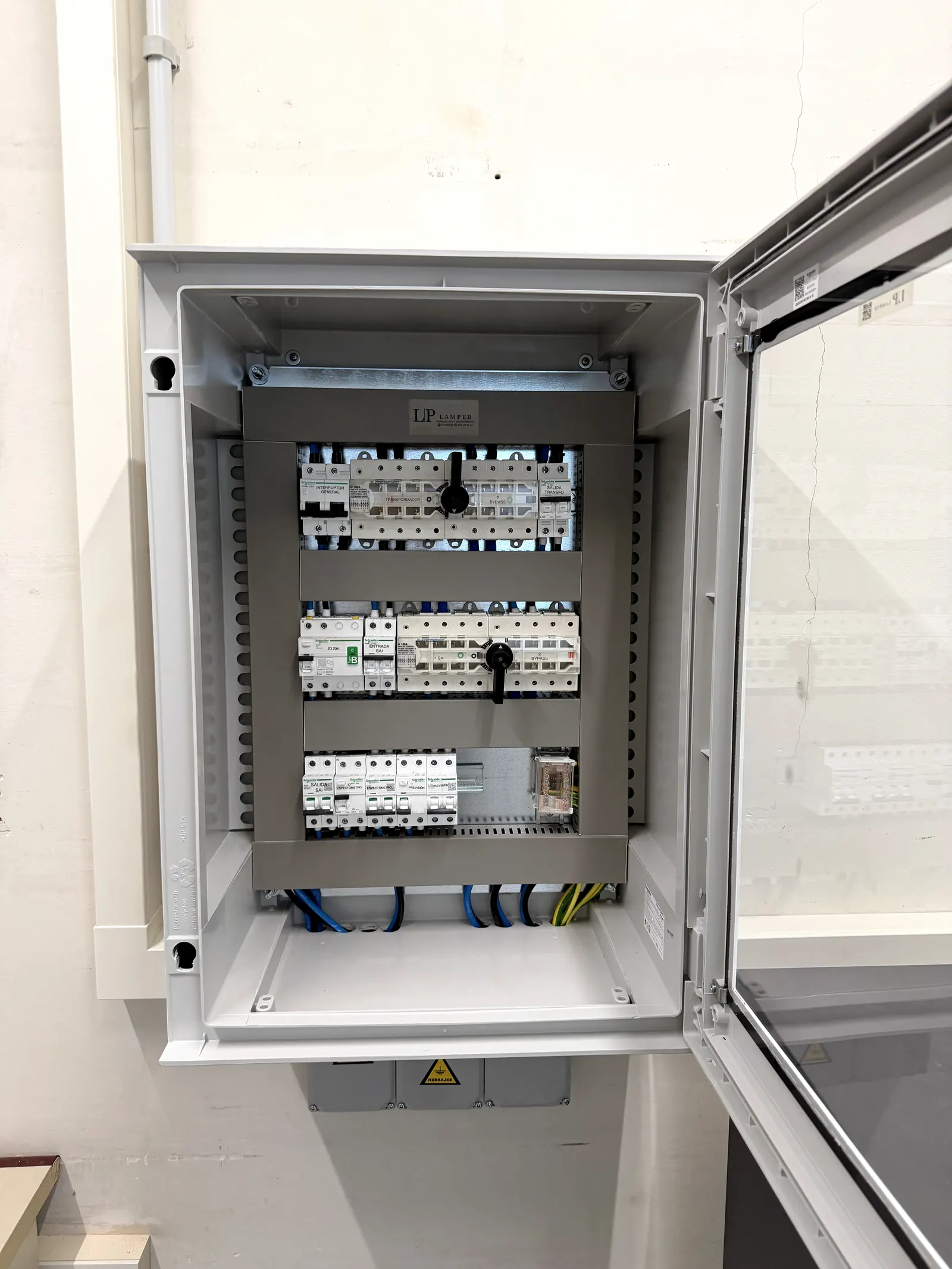
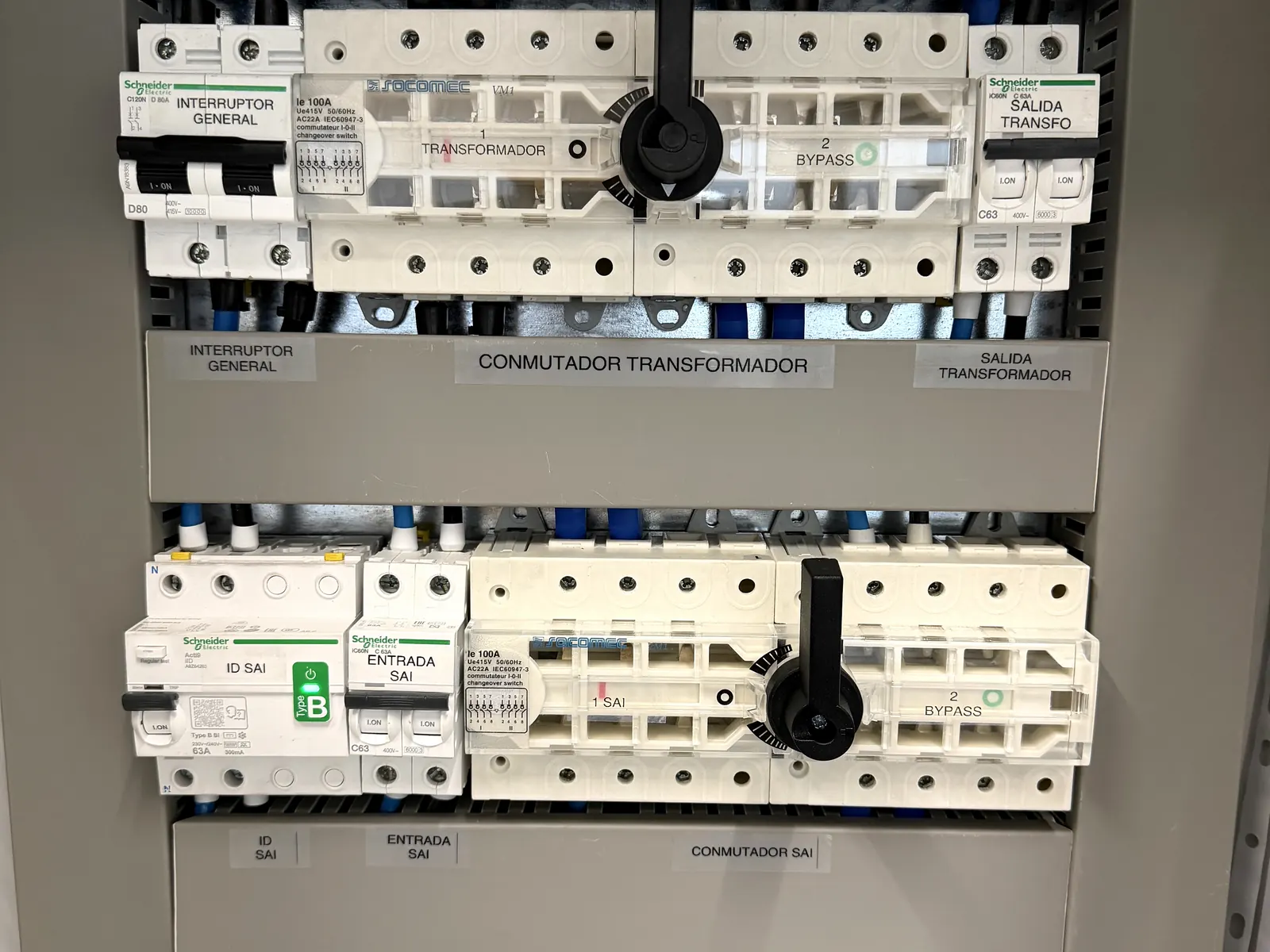
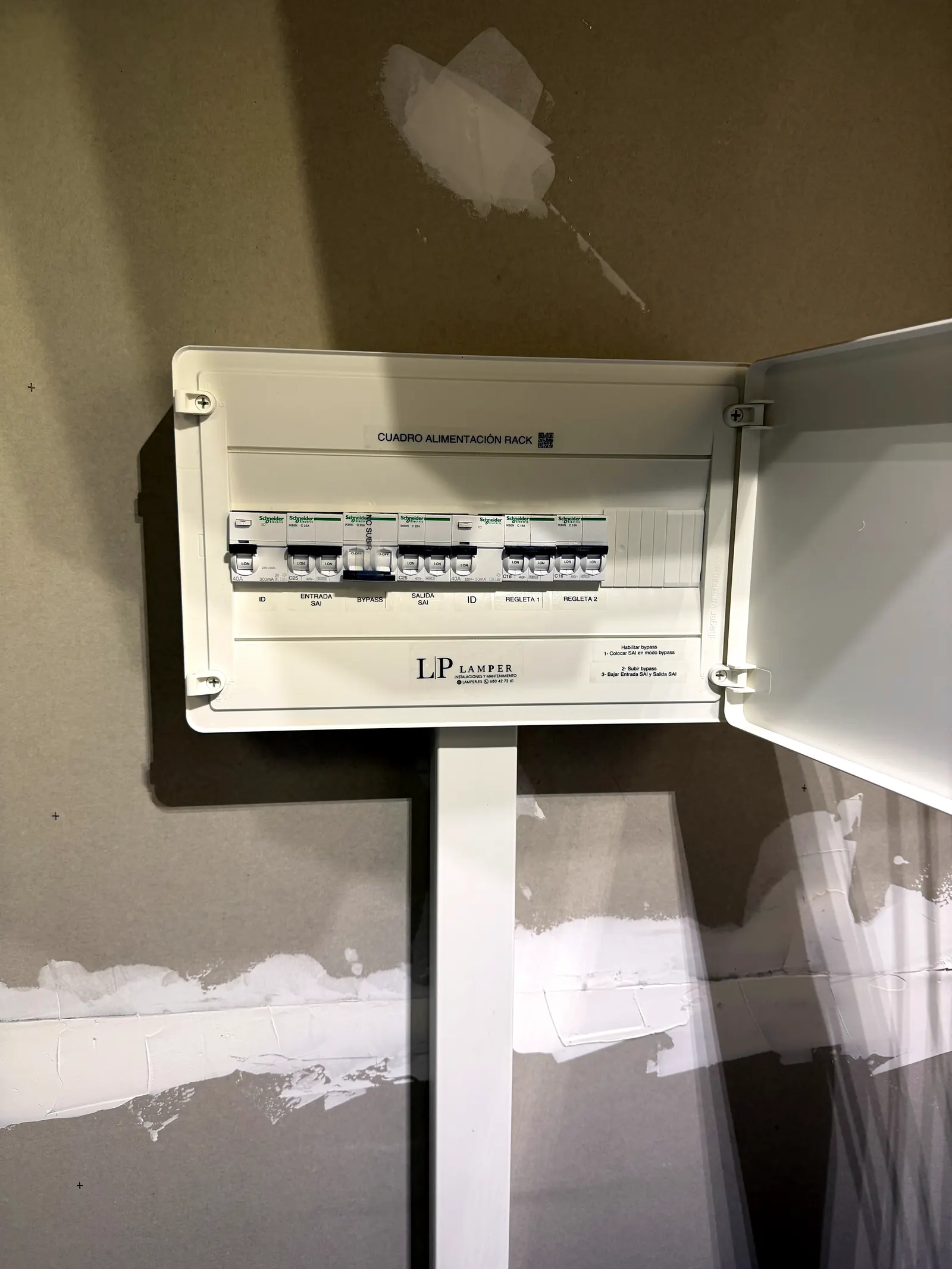
- Clearly labelled switches: UPS input, UPS output and bypass.
- A mechanical or electrical interlock between the UPS output and the bypass, so that they cannot be incorrectly connected at the same time. A sign on its own is not enough.
- The switching sequence defined and written on the panel itself.
- A warning on the panels fed from the UPS that they have a dual supply: when the main switch is turned off, the UPS output remains live.
- Suitable protective devices on each path, sized for the actual load.
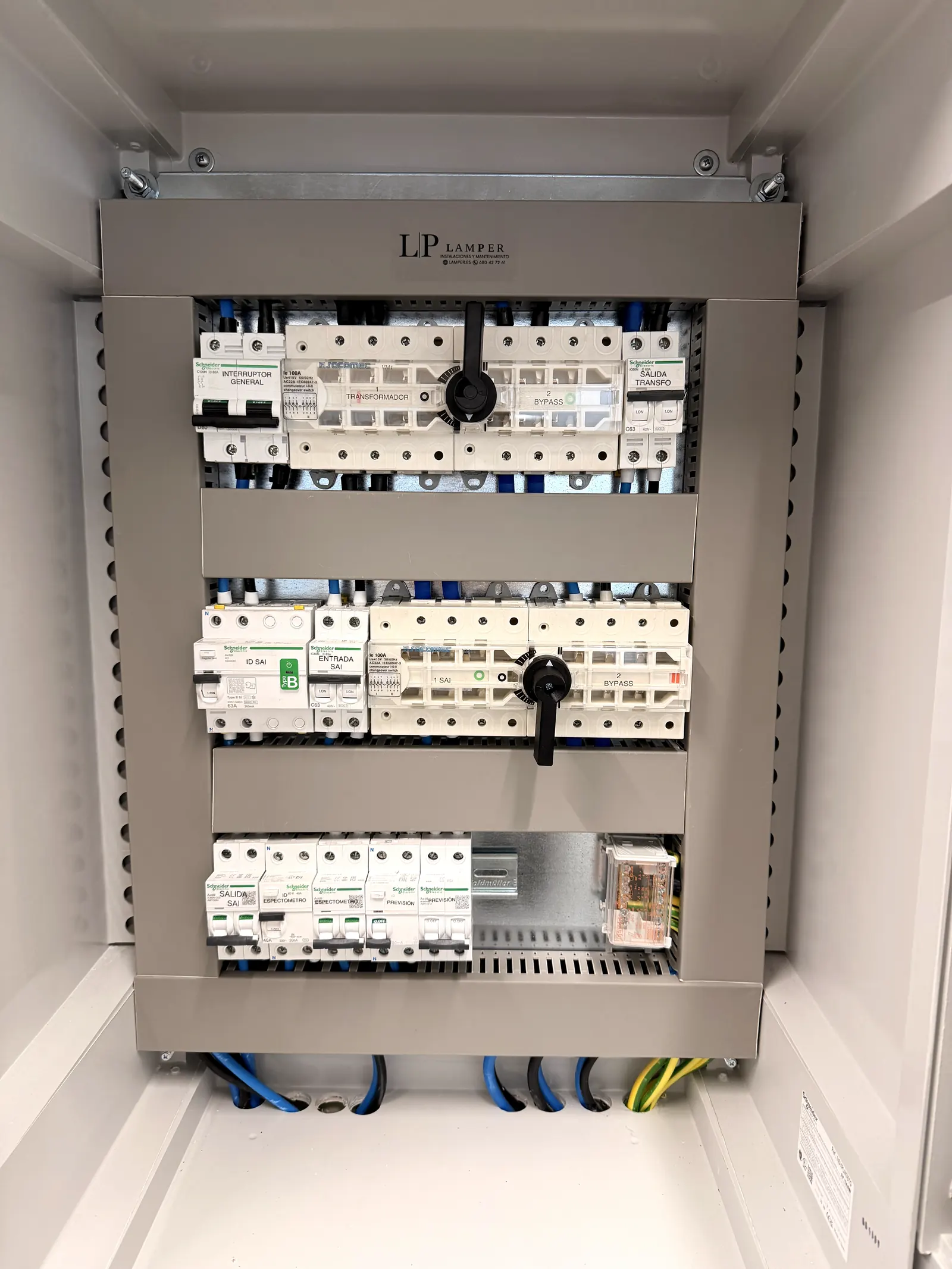
Changeover between sources
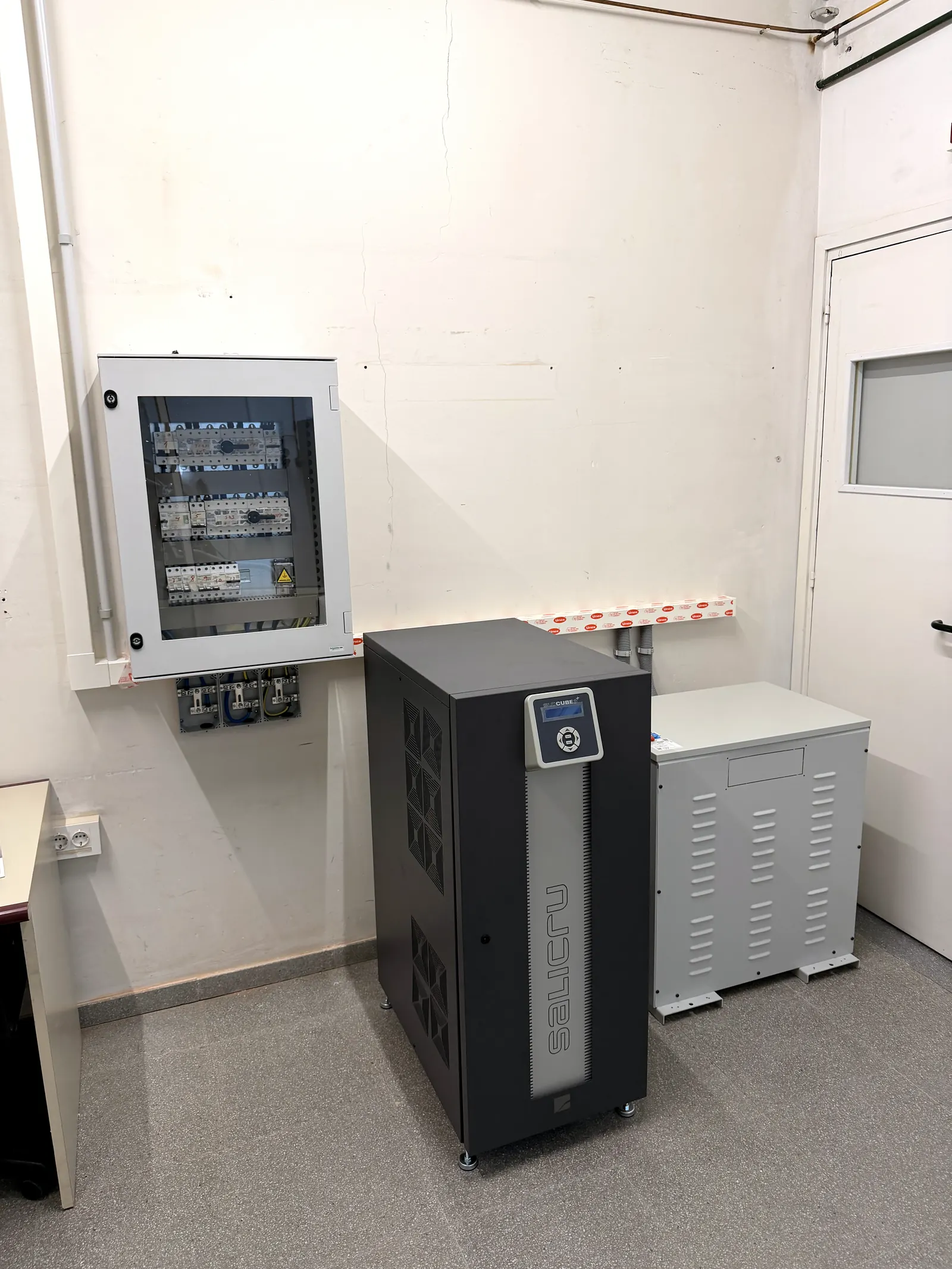
In more complete installations, such as the one in the cover photo, the panel brings several changeovers together in one cabinet: one for a transformer and one for the UPS, each with its own main switch, bypass and output. Everything labelled, so any technician can see at a glance what each switch supplies and how to operate it.
All the way to the rack
The final part is distribution to the equipment. We build dedicated rack power panels, with separate protection for each circuit, so that a fault in one device doesn't cut power to the others.
What to check if you already have a UPS
- Is there a maintenance bypass, and does anyone in the company know how to use it?
- Are the switching instructions written on the panel?
- When were the batteries last replaced? Their service life is limited and the UPS may show that everything is fine until the power cut comes.
- Is the UPS still sufficient for the current load, or has equipment been added over time?
- Has a real mains failure ever been tested, in a controlled way?
- Does the battery room or cabinet have the ventilation specified by the manufacturer?
What we do at Lamper
We design and build the changeover and bypass panel, install and connect the UPS and its batteries, distribute power to the racks and critical equipment, and leave everything labelled and documented. We can then take care of the maintenance so that it works on the day you need it.
If you would like us to check your installation, send us a photo of the panel and the UPS: we'll tell you what we see.