Blog ·
The Christmas shutdown: how to use it for electrical maintenance in your industrial unit
The days when production stops are the best time to check panels, connection tightness and protective devices without stopping anyone. What to prepare now, what to measure before switching off and how to work de-energised safely.
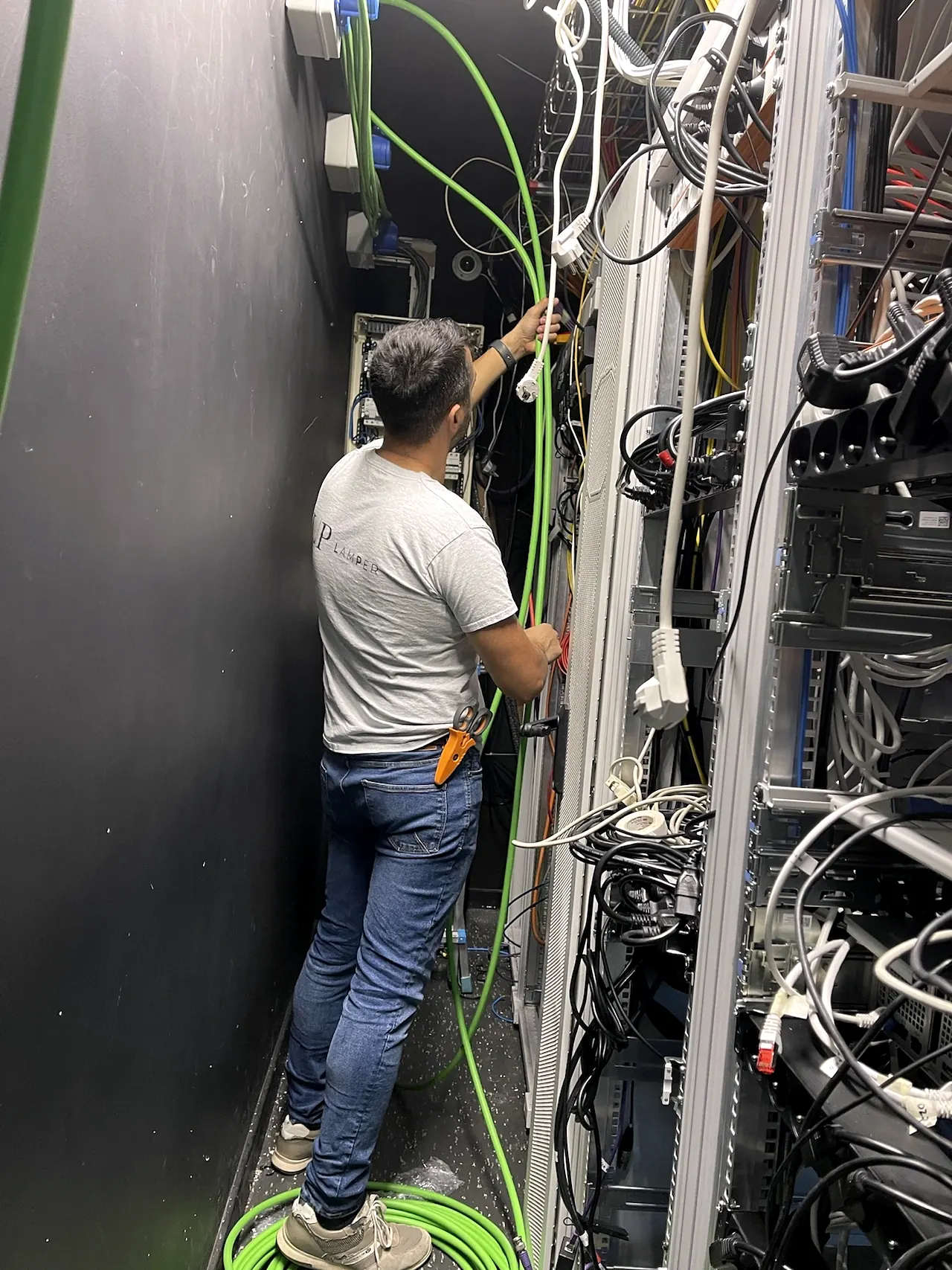
In many businesses, the Christmas holidays are among the few days of the year when the industrial unit falls silent. For electrical maintenance, that is an opportunity: work that requires cutting power to a panel or a line can be done without stopping production. To make the most of it, the shutdown is prepared now, not on the last working day.
Why during the shutdown and not at any other time
Some tasks can only be done with the installation disconnected: re-tightening the connections of a main switchboard, replacing protective devices or busbars, thoroughly cleaning the inside of cabinets, checking motor terminals or connecting the new machinery arriving in January. Doing them on a normal day means stopping a line or the whole workforce. During the shutdown, that cost disappears.
What to measure before switching off
Some checks require the installation to be running, so it is best to do them in the preceding weeks, with the unit at full capacity:
- Thermographic survey of the panels: a loose connection or an overloaded protective device only heats up when current flows. The thermal camera locates the hot spots, which are noted so they can be fixed during the shutdown.
- Measurement of consumption and phase balance, to find out whether any line is at its limit before adding more load.
- A list of the year's trips and faults: which protective devices have tripped, on which machines and when. It's the best clue as to where to look.
Thermal imaging and measurements under load are carried out with the panel open and live. They should only be done by authorised, trained personnel, with the appropriate protective equipment and following a work procedure, as required by Real Decreto 614/2001 for measurements on electrical installations.
What can be done during the shutdown
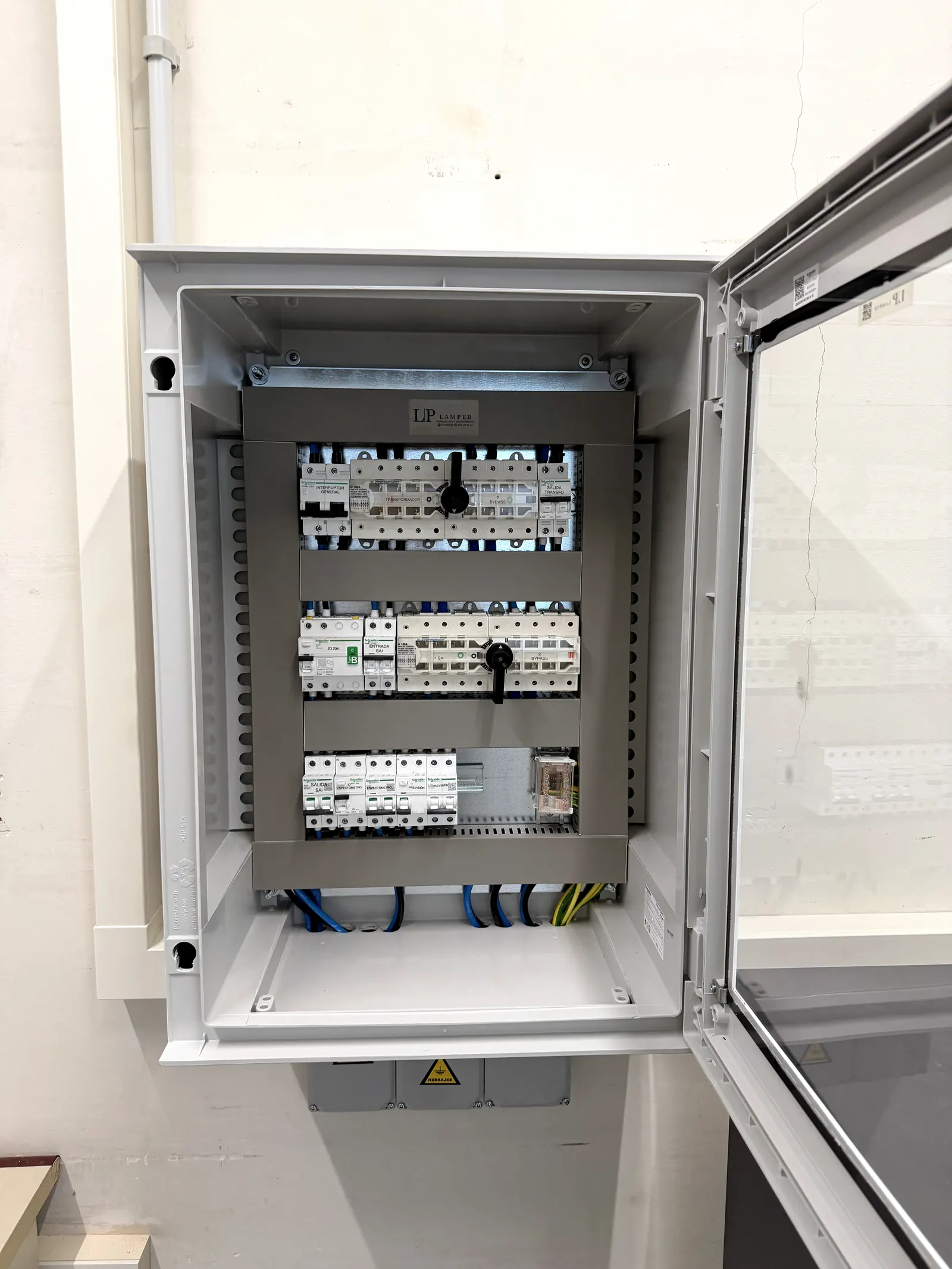
- Re-tightening connections in main, sub-distribution and machine panels, starting with the hot spots detected.
- Cleaning the inside of the panels: built-up dust and dirt encourage overheating and insulation faults.
- Replacing protective devices that are damaged, ageing or incorrectly sized for the actual load.
- Testing the RCDs and measuring the earthing.
- Checking the terminals and wiring of the main motors.
- Labelling circuits and updating the diagrams with changes made during the year.
- Connecting new machines or panel extensions that require part of the installation to be de-energised.
Working de-energised, methodically
The unit being shut down does not mean the installation is de-energised. Royal Decree 614/2001, on the protection of workers against electrical risk, sets out in its Annex II the procedure for removing voltage before work, in five steps followed in order:
- Disconnect the part of the installation to be worked on from all its power sources.
- Prevent any possible back-feed, preferably by locking the switching mechanism.
- Verify the absence of voltage.
- Earth and short-circuit. This is mandatory at high voltage and, at low voltage, when the installation could accidentally become live, through induction or backfeed from a solar self-consumption system, a generator set or a UPS.
- Protect against nearby live parts, if any, and mark out the work area.
Until all five steps are complete, the affected part is considered live. In an industrial unit with several sources, such as a solar self-consumption system, a generator set or a UPS, it is best to have them all located before starting: any of them could back-feed the work area. The same royal decree points out that capacitors and other elements that retain voltage after disconnection must be discharged.
How to prepare for it now
- Set the exact shutdown dates and which parts of the installation can be de-energised.
- Decide which equipment must stay powered (cold rooms, servers, alarms, security systems) and how its supply will be guaranteed while work is under way.
- Carry out the measurements under load and compile the year's fault list in the preceding weeks.
- Order any replacement materials in advance, so nothing is missing on the day.
- Plan the order of the work and the re-energisation, with a final check of all equipment before the workforce returns.
What we do at Lamper
Our team has more than 20 years' experience in industrial and commercial installations. We plan the shutdown with you: we take the preliminary measurements under load, prepare the list of jobs and materials, carry out the maintenance with the installation de-energised and leave everything tested and documented for your return. That way, on the first working day of the year, your facility starts up with its installation checked.
This article is a general summary. Every installation has its own particularities, and electrical work must be carried out by qualified professionals, following the safety procedure appropriate to each case.