Blog ·
Reactive energy on your company's bill: what it is, why you pay for it and how to correct it
If your industrial unit's electricity bill includes a reactive energy charge, you are paying for consumption that does no useful work. We explain where it comes from, when it is billed under the regulations and how to correct it with a properly sized and maintained capacitor bank.
Many business electricity bills include a line that few people look at: the reactive energy charge. It does not correspond to any particular machine or to extra working hours, yet it is paid every month. The good news is that, in most cases, it can be corrected with a simple installation and periodic maintenance.
Active energy and reactive energy
Active energy is the energy converted into useful work: it drives a motor, heats a resistor or powers a light fitting. Reactive energy is what certain equipment needs to create its magnetic fields: motors, transformers, compressors, welders or lighting with ballasts. It flows back and forth between the grid and the load without doing any work, but it travels through the cables, takes up capacity in the installation and the distribution network, and causes losses.
The relationship between the two is expressed by the power factor, the well-known cos phi. The closer it is to 1, the less reactive energy the installation draws in proportion to active energy.
When it appears on the bill
CNMC Circular 3/2020, which sets the methodology for transmission and distribution access tariffs in Spain, establishes when reactive energy is billed:
- It applies to all supplies except low-voltage ones with a contracted power of 15 kW or less in every period. In other words, it affects most industrial units, workshops and companies on the 3.0TD tariff or connected at high voltage.
- It is billed in all time periods except period 6.
- It is only charged when reactive energy consumption exceeds 33% of active energy over the billing period, and only on that excess. That 33% is roughly equivalent to a power factor of 0.95.
In addition, for consumers connected above 1 kV, the same circular sets a specific requirement in period 6 regarding capacitive energy. That is why poorly regulated compensation, which injects capacitive reactive energy at night or at weekends, can also cost money.
How to correct it: the capacitor bank
The usual solution is to install a capacitor bank in the main switchboard, or next to the largest loads. The capacitors supply the reactive energy the motors need, so it no longer has to be drawn from the grid.
For it to work properly, several things need to be taken into account:
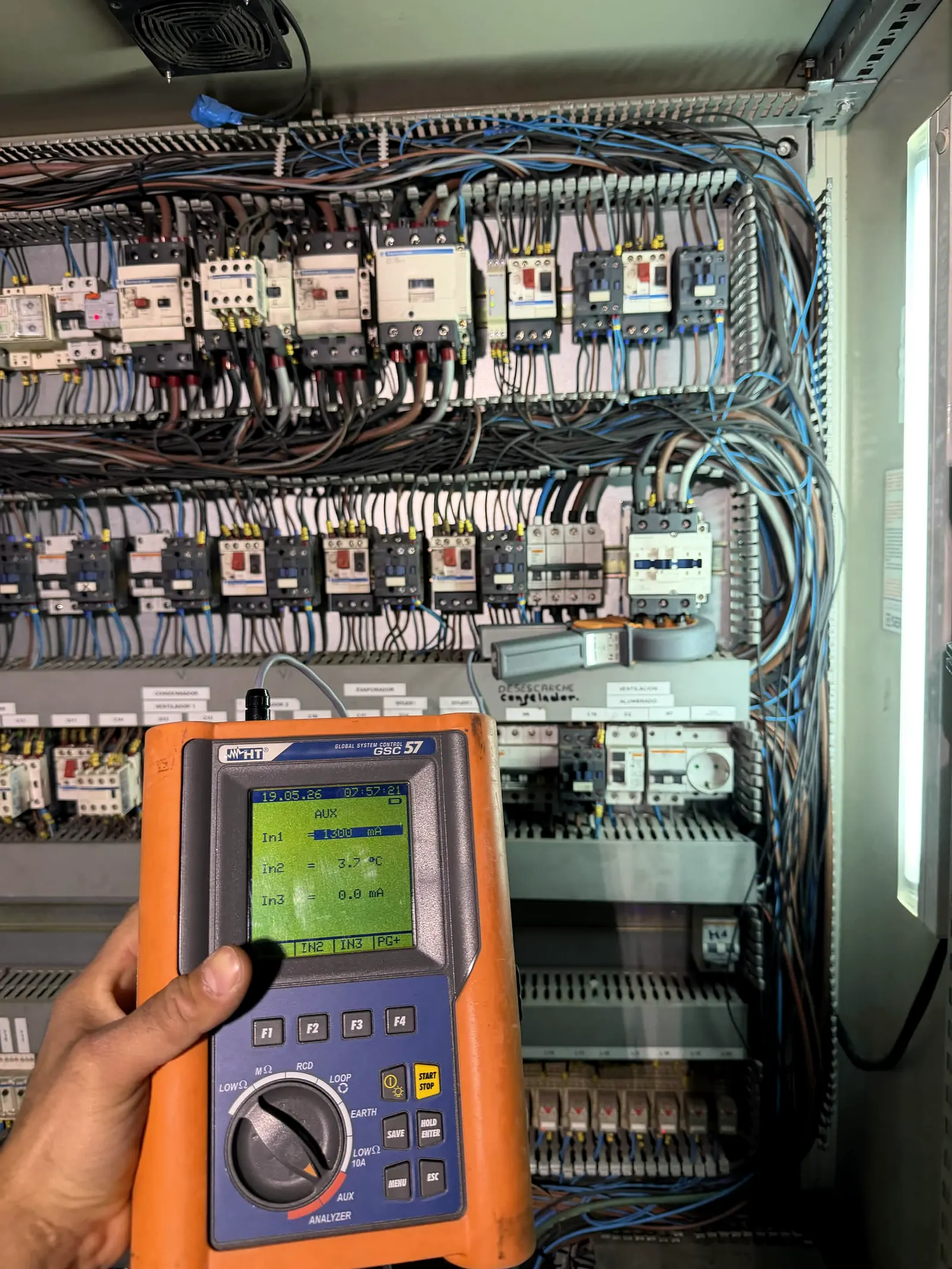
- Size it with real data: measure for several days with a power quality analyser and review the billing history, rather than guessing.
- Choose an automatic bank with steps and a controller, which connects only the capacitance needed at each moment and avoids going capacitive when the plant is stopped.
- Consider harmonics: variable speed drives, rectifiers and other electronic loads can cause resonance with the capacitors. In those cases, detuned banks with reactors are used.
- Protect and connect it correctly, with its own switch, fuses and adequate ventilation in the enclosure.
The maintenance that is often forgotten
A capacitor bank does not last forever. Over the years, the capacitors lose capacitance, the contactors wear and the controller can end up poorly set after a change in the machinery. The typical symptom is that the reactive energy charge, which had disappeared, shows up on the bill again.
It is worth checking periodically:
- The actual capacitance of each step and the condition of the capacitors, looking for bulging or leaks.
- Contactors, fuses and connections, with thermography if possible.
- The controller setting and that the final power factor is as expected.
- Ventilation and temperature inside the enclosure.
What we do at Lamper
With more than 20 years in industrial and commercial electrical installations, we measure the installation with a power quality analyser, review your bills, size and install the right capacitor bank and include it in our maintenance so it keeps working over the years. If you already have a bank and the reactive charge has come back, we check it and tell you what is wrong.
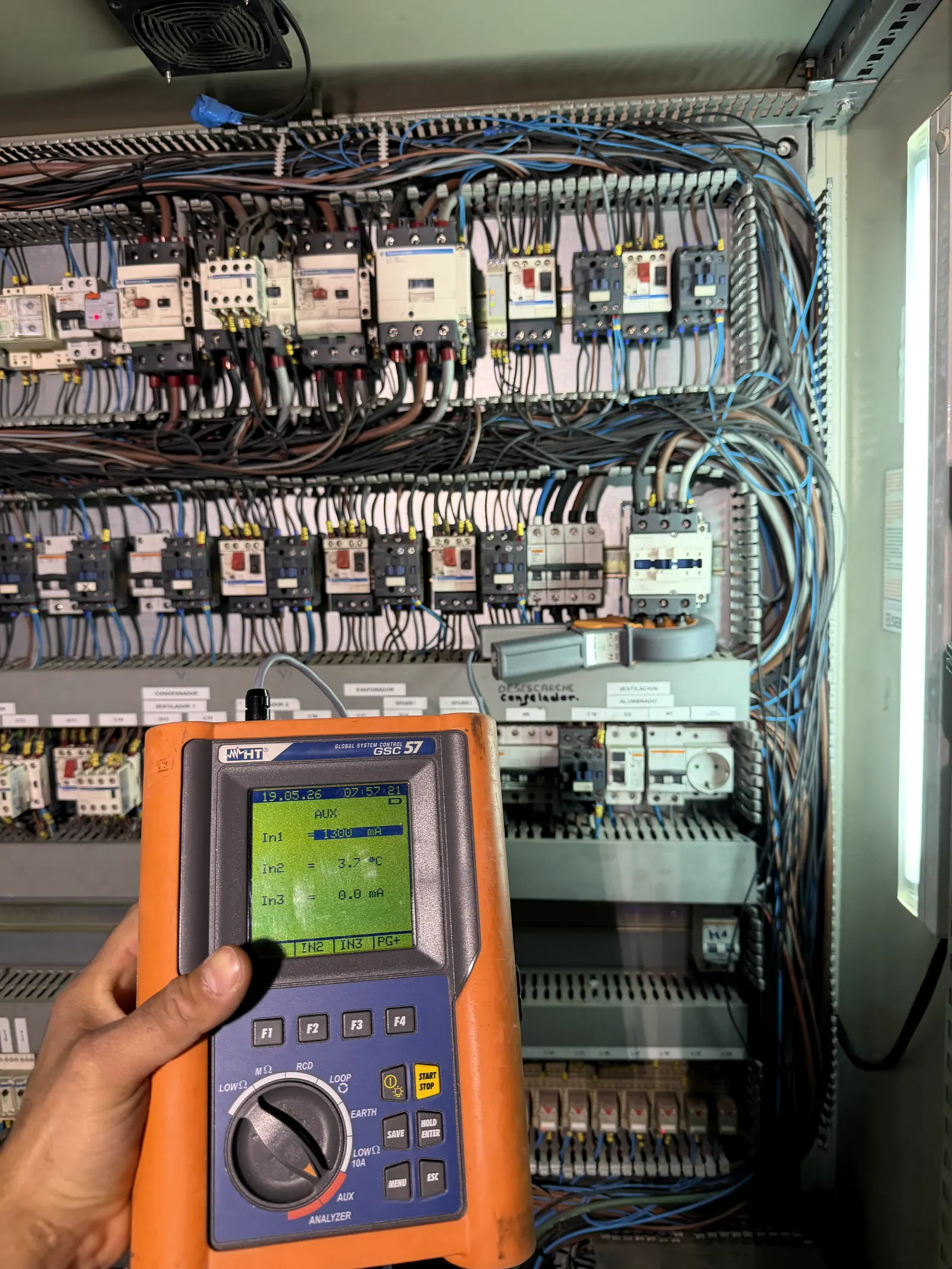
Send us a photo of your latest bill (you can cover any personal details) and of the main switchboard, and we will tell you what we see.
This article is an informative summary. The exact billing conditions depend on each supply's access tariff and on the regulations in force at any given time.