Blog ·
Hard water: how a water softener works and what it needs to last
Limescale damages water heaters, boilers, coffee machines, dishwashers and taps. We explain how a water softener works, why it should have a bypass and a filter, and what maintenance it needs, with photos of real installations.
Across much of the province of Barcelona, mains water is hard: it carries a lot of dissolved limescale. That limescale is deposited when water is heated or evaporates, and ends up on water heater elements, boiler heat exchangers, coffee machines, dishwashers and taps. A properly installed water softener prevents it.
How it works
The water softener passes water through a resin that captures calcium and magnesium, which cause limescale. When the resin is saturated, the unit regenerates using brine from the salt tank. That is why the salt must be topped up: without it, the unit stops softening even if it appears to be working.
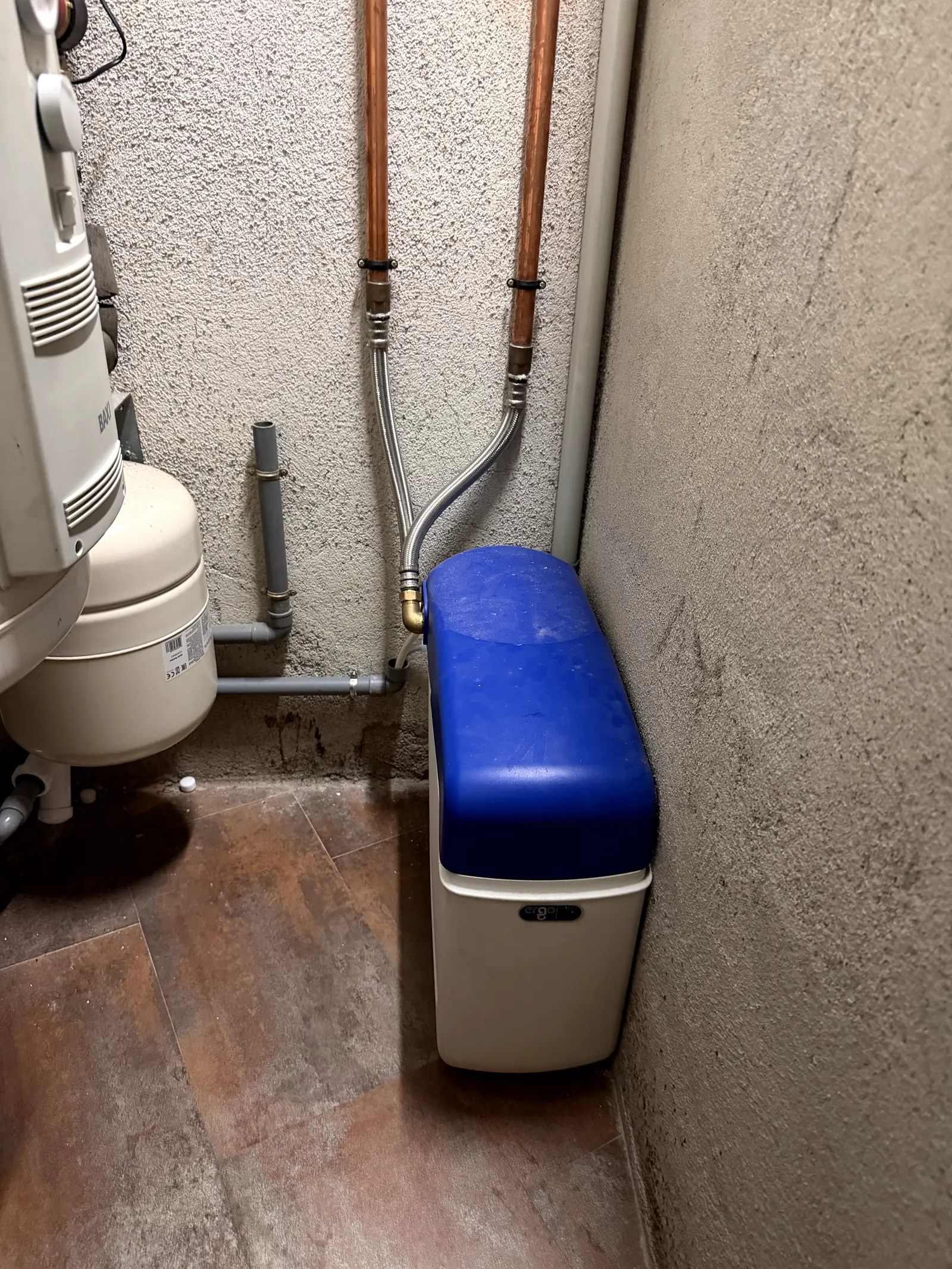
What a good installation must include
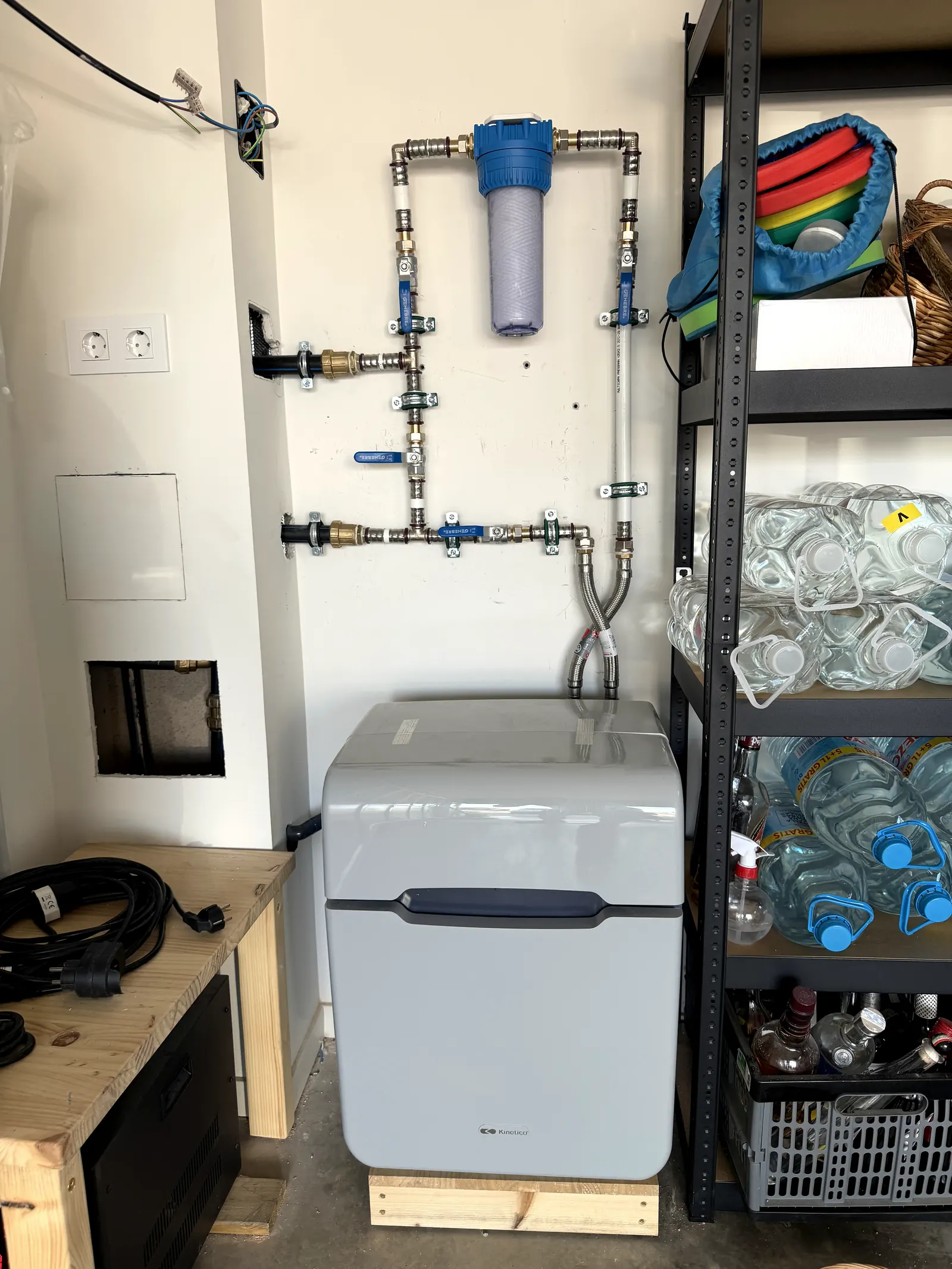
- Bypass: a set of valves that lets you isolate the water softener and keep water flowing while it is serviced or repaired.
- Sediment filter upstream of the unit, so sand and particles from the mains do not reach the resin.
- Shut-off valves at the inlet and outlet.
- Regeneration drain with an air gap: the pipe discharges with an air break, without connecting directly to the drainage system, so that dirty water cannot flow back into the installation.
- Non-return valve before the unit, as required by the Spanish Building Technical Code (Código Técnico de la Edificación).
- A tap with unsoftened water if it is needed for a specific use.
The cover photo shows an installation with a sediment filter, shut-off valves and a bypass on the unit itself.
Maintenance
- Top up the salt when the tank runs low.
- Replace the sediment filter cartridge periodically.
- Check water hardness at the outlet and adjust the residual hardness with the mixing valve. If the water is for human consumption, it must not fall below 55 mg/L of calcium carbonate (5.5 French degrees), the minimum set by Real Decreto 3/2023 for softened water.
- Periodic servicing and disinfection of the resin, as specified by the manufacturer.
Does your company need one?
If you have water heaters, boilers, vending or coffee machines, industrial dishwashers or process equipment that uses hot water, limescale is costing you money in breakdowns and energy. Measuring water hardness is the first step.
What we do at Lamper
We measure water hardness, size the unit to your consumption, install it with a bypass and filter, and take care of maintenance. Learn more in plumbing and gas.